
William Bonner (1756–1834); 5th Great-Grandfather of Sgt Maj John Champe Chapter Compatriot Kenneth L Bonner
William Bonner was born in 1756 in Hertford County, North Carolina. The Bonner family was already well established in the American colonies, having descended from Bonner immigrants who arrived from Gloucestershire, England, and begin settling in Virginia, then North Carolina, about 1647.
About 1775, William married Elizabeth Richardson after relocating westward to the North Carolina frontier, settling in what became Lincoln County. As tensions between Great Britain and the American colonies escalated into war, Bonner answered the call to military service.
In 1776, at the age of twenty, Bonner enlisted as a private in the Rowan County militia under Captain Robert Alexander and Colonel Francis Locke of the 1st Salisbury District Minutemen. According to his later Revolutionary War pension deposition, he “entered service as a militia man under Captain Robert Alexander upon a tour of three months against the Cherokee Indians,” and that he again “entered the service as a volunteer upon a three months tour under Captain Jonathan Potts [and] Colonel Hart & Hagens – this tour was against the British & Tories.”
Bonner was under the command of Brigadier General Griffith Rutherford and participated in the Cherokee Expedition in the Fall of 1776. The Cherokee, allied with the British Crown, had launched attacks against frontier settlements throughout the Carolina backcountry. Rutherford’s expedition was one of the largest military operations conducted by North Carolina during the Revolution and marched deep into Cherokee territory, destroying towns, crops, and military resources. For the young William Bonner, this campaign provided his first experience of military life, long marches, frontier warfare, and service alongside men who would remain part of his military network throughout the war.
Bonner’s service in the Cherokee Expedition introduced him to the officers and soldiers who would shape his military career throughout the Revolution. Serving under Captain Robert Alexander and Colonel Francis Locke in Rutherford’s army, he learned the rigors of frontier campaigning while participating in one of the most significant military expeditions mounted by North Carolina during the war. In the years that followed, the Salisbury District militia remained closely connected through militia service, family ties, and frontier defense. As the British shifted the war into the Carolinas in 1780, Bonner again answered the call to duty, serving in Colonel Robert Irwin’s Mecklenburg County Regiment of Militia, where many of the same regional relationships forged during the Cherokee campaign continued into the Southern Campaign.
By 1780, Bonner was serving in the Mecklenburg County Regiment of Militia under Colonel Robert Irwin. He “again volunteered my services under Captain McKnight and belonged to Colonel Irwin’s Company and were attached to General Sumpter’s Brigade – where we were marched from the State of North Carolina to the State of South Carolina – during said Tour I was in the Battle of the Hanging Rock” in Lancaster County, South Carolina on the 6th of April 1780. Patriot forces launched a determined attack, “where the engagement lasted between 3 & 4 hours,” against a British outpost established to recruit Loyalists and suppress Patriot activity in the backcountry. “This tour was also a three months tour – we were discharged soon after the battle of the hanging rock – when we returned home.” The battle became one of the most important early Patriot actions in the South Carolina interior and demonstrated the growing strength of the Southern resistance.
The Patriot victory at Kings Mountain on October 7, 1780, marked a turning point in the Southern Campaign and was achieved largely by frontier militia from western North Carolina, South Carolina, and Virginia. Many of the officers and soldiers who served in Colonel Robert Irwin’s Mecklenburg County Regiment shared close military and family ties with the men who fought at Kings Mountain and later joined the forces of General Nathanael Greene. As the war shifted from militia actions to more organized campaigns in the Carolinas, this network of experienced Mecklenburg veterans increasingly supplied recruits and leaders to mounted units such as Colonel William Polk’s Regiment of Light Dragoons. William’s transition from Irwin’s militia command to Captain Samuel Martin’s Troop appears to have followed this broader pattern of military service among Mecklenburg Patriots during the final years of the Revolution.
The military network in which Bonner served included many Mecklenburg County Patriots whose names would later reappear in other Revolutionary War units. Evidence suggests that William’s service was closely connected to the same Mecklenburg military tradition that produced veterans of Hanging Rock, Kings Mountain, Cowan’s Ford, Guilford Courthouse, and the campaigns of General Nathanael Greene.
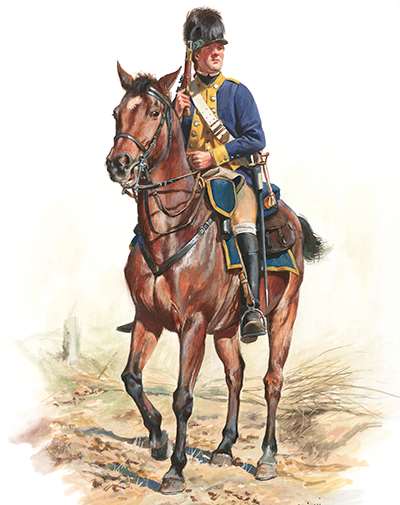
Following an interlude in service, “that about 19th of March 1781 I enlisted myself in the room and stead of Joseph Beal for the term of twelve months,” in the 3rd Regiment of South Carolina State Troops, better known as Colonel William Polk’s Regiment of Light Dragoons. He “continued in the Regiment aforesaid as a private soldier against the common enemy until the 7th day of April 1782 – at which period he received from Colonel William Polk and (sic) Honorable discharge.” This mounted Corps formed part of General Thomas Sumter’s Brigade operating under General Nathanael Greene’s Southern Army.
A surviving payroll dated March 16, 1782, identifies William Bonner as a member of Captain Samuel Martin’s Company in Polk’s Regiment of Light Dragoons. This important primary-source document places him within a specific company rather than merely within the regiment as a whole. Samuel Martin and several of his officers and troopers came from the same Mecklenburg County military community in which William had earlier served.
As a member of Captain Samuel Martin’s Company, Bonner participated in the campaign that systematically eliminated British control of South Carolina’s interior. During 1781, Polk’s Light Dragoons took part in operations at Fort Granby, Orangeburg, and Fort Motte before moving toward the Charleston region. On July 17, 1781, Bonner’s Company participated in the actions at Quinby’s Bridge and Shubrick’s Plantation, where Patriot forces attempted to intercept and defeat retreating British troops. On September 8, 1781, he fought at the Battle of Eutaw Springs, the last major battle of the Revolutionary War in the Carolinas. The regiment later continued operations against British positions near Charleston, including the campaign against Fort Dorchester.
Bonner’s military service extended from the opening years of the Revolution through the final campaigns in the South. His known service began in 1776 and concluded with his discharge on April 7, 1782, several months after the British surrender at Yorktown on October 19, 1781.
Through service in the Cherokee Expedition, the Mecklenburg County militia, Colonel Robert Irwin’s command at Hanging Rock, and Captain Samuel Martin’s Troop of Polk’s Light Dragoons, William Bonner exemplified the citizen-soldier whose perseverance helped secure American independence. His military career connected him to some of the most important campaigns fought in the Southern Theater of the Revolutionary War and placed him among the Patriots who carried the struggle from the Carolina frontier to ultimate victory.
From the mountains of western North Carolina during Rutherford’s Cherokee Expedition to the cavalry operations of Greene’s Southern Army in South Carolina, Bonner’s Revolutionary War service reflects the evolution of the Southern Patriot cause itself. His military career followed the path of many Mecklenburg and Salisbury District Patriots who first defended the frontier, then fought for survival in the Carolina backcountry, and finally carried the war to victory in the South.
Following the war, William moved westward with his family, eventually settling in Kentucky. He died on December 29, 1834, at the age of seventy-eight. He is buried near Murray in Calloway County, Kentucky.
APPENDIX A
WILLIAM BONNER’S REVOLUTIONARY WAR CHAIN OF COMMAND
1776–1782
One of the most remarkable aspects of William Bonner’s Revolutionary War service is the continuity of the military organizations and leadership under which he served. Beginning as a frontier militiaman during the Cherokee Expedition of 1776 and ending as a mounted dragoon in the Southern Army of General Nathanael Greene, William’s military career followed the path of the Southern Patriot cause itself.
────────────────────────────────────────
1776
CHEROKEE EXPEDITION
Private William Bonner
Captain Robert Alexander, Rowan County Militia Company
Colonel Francis Locke, 1st Salisbury District Minutemen
Brigadier General Griffith Rutherford, Commander of the North Carolina Cherokee Expedition
Mission: Suppress Cherokee attacks on frontier settlements and eliminate British-allied Cherokee military capability in western North Carolina.
────────────────────────────────────────
1780
SOUTHERN CAMPAIGN
Private William Bonner
Colonel Robert Irwin, Mecklenburg County Regiment of Militia, Patriot Militia Forces of the Carolina Backcountry
Battles:
Hanging Rock, August 6, 1780
Mission: Attack British and Loyalist forces occupying the South Carolina interior and disrupt Loyalist recruitment efforts.
────────────────────────────────────────
1781–1782
GREENE’S SOUTHERN ARMY
Private William Bonner
Captain Samuel Martin, Troop of Light Dragoons
Lieutenant Colonel William Polk, 3rd Regiment of South Carolina State Troops (Polk’s Regiment of Light Dragoons)
Brigadier General Thomas Sumter, South Carolina Brigade
Major General Nathanael Greene, Commander, Southern Department
Campaigns:
Fort Granby
Orangeburg
Fort Motte
Quinby’s Bridge
Shubrick’s Plantation
Eutaw Springs
Fort Dorchester
Mission: Drive British forces from the South Carolina interior and confine remaining British troops to Charleston.
────────────────────────────────────────
SUMMARY OF SERVICE
1776
Cherokee Expedition, uuder Alexander, Locke, and Rutherford
1780
Battle of Hanging Rock, under Irwin’s Mecklenburg County Regiment
1781–1782
Polk’s Light Dragoons, under Martin, Polk, Sumter, and Greene
────────────────────────────────────────
MILITARY LEGACY
William Bonner’s service reflects the evolution of the Southern Patriot war effort. He began as a frontier militiaman defending North Carolina settlements during the Cherokee Expedition, served with Mecklenburg County Patriots during the darkest days of the Southern Campaign, and ultimately rode with Polk’s Light Dragoons in the operations that helped secure American victory in the Carolinas.
His military career connected him to many of the most influential Patriot leaders in the South, including Griffith Rutherford, Francis Locke, Robert Irwin, William Polk, Thomas Sumter, and Nathanael Greene. Through six years of intermittent service, William Bonner exemplified the citizen-soldier whose perseverance helped secure American independence.
Very nice post. I simply stumbled upon your
blog and wanted to say that I’ve really loved surfing around your blog posts.
After all I’ll be subscribing on your rss feed and I hope you write again soon!